

Business Incentives & Financing in Greater Seattle
Companies considering establishing a headquarters, opening a new facility, or expanding operations into Greater Seattle may qualify for a range of state and local tax incentives, workforce programs, financing tools, and infrastructure support designed to encourage business investment and job creation.
Greater Seattle Partners provides assistance at no cost to companies looking to establish or expand their presence in the region, helping them identify potential incentives and connecting them with the appropriate state, local, and regional partners.
Cross-industry programs
Washington state does not impose a general personal income tax or corporate net income tax, offering a competitive advantage for businesses and individuals. For companies establishing or expanding operations in Greater Seattle, potential incentives include statewide manufacturing and R&D machinery exemptions, industry-specific Business & Occupation (B&O) tax credits and preferential rates, customized workforce training, infrastructure assistance, local support, and applicable federal incentives.
Tax Exemptions & Credits
Sales and use tax exemptions, deferrals, and preferential business tax provisions.
Workforce & Training Support
Company-specific training programs and workforce development assistance.
Infrastructure & Financing
Public infrastructure resources and financing for qualifying projects.
Grants & Funding
Competitive and discretionary programs for expansion, innovation, and exports.
01. Tax Exemptions & Credits
Eligible projects investing at least $2 million in areas such as zero-emission vehicles, hydrogen, clean fuels, renewable-energy equipment, charging infrastructure, and energy storage may qualify for a reduction of deferred state sales and use taxes. Depending on labor and procurement commitments, the reduction can reach 50%, 75%, or 100%.
Chapter 82.60 provides a similar deferral for qualifying manufacturing and R&D projects in eligible counties with unemployment substantially above the statewide average. Eligible costs can include manufacturing buildings, integral offices and warehouses, and qualifying equipment. Compliant projects may receive full forgiveness of the deferred tax.
This is likely Washington’s most useful broadly available business-attraction incentive. It covers qualifying machinery and equipment used directly in manufacturing or qualifying research and development, along with certain installation, repair, cleaning, alteration, and improvement services. It can apply to industrial fixtures, devices, digital goods, pollution-control equipment, and certain supporting equipment, but generally not the building itself or basic building systems.
Qualifying machinery and equipment used directly in manufacturing or eligible R&D can be exempt from state and local sales and use tax. This is one of Washington’s broadest business-attraction incentives.
Chapter 82.94 allows qualifying manufacturing and R&D projects in counties with fewer than 650,000 residents to defer sales and use tax on eligible buildings and equipment. When a project remains in qualifying use and satisfies reporting requirements, the deferred tax generally does not have to be repaid; noncompliance triggers an eight-year repayment schedule.
Opportunity Zones are federally designated census tracts where qualifying investments made through a Qualified Opportunity Fund (QOF) may receive favorable federal capital-gains tax treatment. This is an investor-level tax benefit, not a direct grant or automatic tax exemption for a business simply locating in a zone. Projects must satisfy applicable fund, investment, property, business-activity, and holding-period requirements.
For qualifying investments made after December 31, 2026, the law generally allows a rolling deferral of eligible gains for up to five years, a 10% basis adjustment after five years (30% for qualifying rural funds), and potential exclusion of appreciation on qualifying long-term investments. Investor eligibility and tax outcomes depend on federal rules and individual circumstances.
A qualifying manufacturing, R&D, or computer-service business in an eligible rural county may receive:
● $4,000 per new job when wages and benefits exceed $40,000
● $2,000 per new job when wages and benefits are $40,000 or less
The project generally must increase employment by at least 15%, and the program is subject to a $7.5 million statewide annual cap.
The statutory $40,000 compensation threshold is quite low by 2026 labor-market standards, so many qualifying jobs would fall into the higher credit category.
Certain aerospace, aviation, semiconductor, food processing, forest products, maritime, logistics, alternative jet fuel, and other activities may qualify for preferential B&O rates or credits.
Qualifying warehouse expansions of at least 200,000 square feet may receive state sales-tax remittances on eligible construction and material-handling equipment.
02. Workforce & Training Support
Washington can finance company-specific workforce training through participating community and technical colleges. Employers repay the training account and may claim a B&O tax credit equal to 50% qualifying repayments.
This is especially useful because it applies across many sectors, including companies without large manufacturing tax incentives.
03. Infrastructure & Project Financing
Public infrastructure supporting private business growth may be financed through the Community Economic Revitalization Board. Eligible infrastructure can include industrial water and wastewater, Stormwater systems, telecommunications, transportation, port facilities, public buildings, and other site-serving improvements.
The company is normally the beneficiary of the infrastructure investment, while the local government, port, or tribe is the applicant.
The Washington Economic Development Finance Authority can issue nonrecourse revenue bonds and provide other financing structures for eligible economic-development projects. This may be relevant to larger manufacturing, industrial, agricultural, energy, and infrastructure investments.
Qualifying data centers can receive sales and use tax exemptions on eligible server equipment, installation, power infrastructure, and certain construction services. For King, Pierce, and Snohomish counties, the high-population-county program stops issuing new certificates after July 1, 2028.
04. Grants
Principal Washington incentives
Discretionary economic development grants for major business attraction, retention and expansion projects. Funds can support site readiness, infrastructure, equipment-related needs, permitting/engineering and other project costs tied to significant job creation and private capital investment. Recent awards have ranged around $200,000–$350,000, including a $350,000 award supporting Portal Space Systems’ Bothell expansion.
Major requirements and limitations
Highly discretionary and reserved for strategically important projects with substantial jobs and private investment. Businesses do not simply apply for a standard grant; projects are typically developed with the local Associate Development Organization (ADO) and Commerce, and the Governor determines awards based on Commerce recommendations. Private investment is required.
Principal Washington incentives
Competitive grants for manufacturing expansion, technology adoption, workforce development and projects creating manufacturing or R&D jobs. The 2026 round provided $1 million statewide, with individual business awards of $150,000; program funding has supported facility expansion, infrastructure, production capacity and workforce initiatives.
Major requirements and limitations
Competitive and offered in funding rounds rather than continuously. Businesses work through the ADO for the county where the business is located or will expand. Projects must advance manufacturing/R&D employment and align with state economic-development priorities. The 2026 application round has closed, but the program is worth keeping in the matrix as a recurring opportunity.
Principal Washington incentives
State-funded customized workforce training grants for new or existing employees. Washington pays up to 50% of eligible customized training costs through a participating college or other eligible educational institution, with the employer providing the other half through cash or eligible in-kind contributions. The program specifically identifies new businesses needing a skilled labor pool as a priority.
Major requirements and limitations
The grant is technically awarded to the training institution rather than directly to the company. Employer generally provides a dollar-for-dollar cash or in-kind match. Applications are reviewed throughout the fiscal year and are subject to available funding. FY 2026-27 funding is active.
Principal Washington incentives
Public infrastructure financing tied directly to a committed private business location or expansion project. CERB provides low-interest loan/grant packages to local governments and tribes for infrastructure necessary for private business siting, expansion or retention. Eligible infrastructure includes roads, utilities, buildings, rail, port facilities, telecommunications, water and sewer. Grants may comprise up to 25% of the total CERB award, and CERB loans can reach $5 million per project.
Major requirements and limitations
The business itself is not the applicant; the local government, port, tribe or eligible public entity applies in partnership with the company. The private project must be ready to proceed and contingent on CERB assistance, generate significant jobs and/or private investment, and new-job median hourly wages must exceed the county median. Applicant must generally provide a 20% cash match. Applications are accepted on an ongoing basis.
Principal Washington incentives
Export-development reimbursement grants for qualifying small businesses. Washington Commerce reimburses eligible expenses such as international trade shows, trade missions, foreign-market travel, translation, international marketing, compliance testing and certain export-related professional services. Companies can qualify for vouchers of up to $10,000.
Major requirements and limitations
Designed for small businesses pursuing international sales rather than relocation itself. The business must meet SBA small-business requirements and approved expenses must support future export activity. The grant generally cannot cover more than 75% of eligible event expenses, requiring at least a 25% company contribution.
Principal Washington incentives
Workforce training reimbursement: WorkSource can reimburse part of the wages paid to qualified newly hired workers while the employer provides on-the-job training. This can help offset the cost of recruiting and training employees when a company opens, expands, or builds a new Washington workforce.
Major requirements and limitations
Available only for eligible workers and participating employers through the WorkSource system. The employer provides the training and is expected to retain the worker after successful completion. Reimbursement levels and training periods depend on the applicable workforce program and participant eligibility.
Principal Washington incentives
Lower-cost project financing: WEDFA can issue taxable and tax-exempt nonrecourse economic-development revenue bonds for qualifying private projects. For eligible projects, particularly qualifying manufacturing investments, tax-exempt private-activity bond financing can reduce borrowing costs because the project may access lower tax-exempt interest rates.
Major requirements and limitations
This is financing, not a grant or state-backed loan. Private investors purchase the bonds and no state funds are loaned to the company. Tax-exempt financing is subject to federal eligibility rules and Washington’s private-activity bond-cap allocation; Washington’s 2026 bond cap includes a $270.0 million allocation for the “Small Issue” category used by qualifying projects. WEDFA also requires an application and related financing documentation.
Industry-Specific Incentives
Eligibility depends on project location, capital investment, job creation, wages, facility use, research activity, and timing can all affect which incentives are available.
Explore incentives by industry
Principal Washington incentives
Manufacturers and processors for hire of commercial airplanes, airplane components, and qualifying aerospace tooling may claim a B&O tax credit equal to 1.5% of qualifying preproduction-development expenditures. Qualifying aerospace businesses may also claim a B&O credit based on property and leasehold excise taxes paid on eligible facilities and equipment. Nonmanufacturers performing qualifying aerospace product development for others receive a 0.9% B&O rate through June 30, 2040. Certified FAR Part 145 repair stations receive a 0.2904% B&O rate through June 30, 2040 for qualifying retail sales that meet specified sales-tax exemptions. Qualifying aerospace businesses may also receive a sales/use tax exemption for computer hardware, software, and peripherals used primarily in aerospace product development or aerospace services.
Major requirements and limitations
Many dedicated aerospace provisions are specifically written for commercial airplanes, airplane components, aerospace product development, aerospace tooling, or certified FAR Part 145 repair stations. The 0.2904% repair-station rate does not apply to all repair-station revenue. Washington’s former preferential commercial-airplane manufacturing rates were repealed effective April 1, 2020; covered commercial-airplane manufacturing is currently generally taxed at 0.484%, although statute provides a mechanism for reduction to 0.357% if specified conditions are satisfied. Space, satellite, launch, drone, and defense manufacturers should not automatically assume they qualify for commercial-airplane incentives.
Principal Washington incentives
Manufacturing machinery and equipment, including qualifying installation and repair services, can be exempt from state and local sales and use tax. Manufacturing and qualifying R&D projects may also receive sales/use tax deferrals on buildings and equipment in eligible counties with fewer than 650,000 residents. A separate rural job credit provides $2,000 or $4,000 per qualifying new job, depending on compensation.
Major requirements and limitations
The machinery must be used directly in manufacturing or qualifying R&D/testing. Buildings and ordinary building systems generally do not qualify for the statewide machinery exemption. Geographic deferrals require preapproval and continued qualifying use; job credits require at least a 15% employment increase and are subject to an annual statewide cap.
Principal Washington incentives
Washington has enacted a preferential 0.275% B&O tax rate for manufacturing and retail or wholesale sales of qualifying alternative jet fuel (AJF). A separate production credit provides $1.00 per gallon for qualifying AJF achieving at least a 50% lifecycle emissions reduction compared with conventional jet fuel, increasing by $0.02 for each additional percentage point of emissions reduction, up to $2.00 per gallon. Similar B&O and public utility tax credits are available for qualifying AJF purchased for use on flights departing Washington.
Major requirements and limitations
These incentives are activation-dependent. They cannot be claimed until the Department of Ecology verifies that operating Washington facilities have cumulative AJF production capacity of at least 20 million gallons annually and provides the required notice. The producer credit generally requires the production facility to be located in a county with fewer than 650,000 residents, although a producer may designate a qualifying Washington blender. Credits are nonrefundable, require an Ecology carbon-intensity score and documentation, and generally may be carried forward for only one subsequent calendar year. The incentives operate for a limited period after activation.
Principal Washington incentives
Chapter 82.89 provides a sales and use tax deferral for eligible projects investing at least $2 million in buildings and equipment. Covered activities include zero-emission vehicles and components, charging and fueling infrastructure, renewable or electrolytic hydrogen, clean fuels, renewable-energy equipment, and energy or hydrogen storage. Depending on labor and procurement commitments, a project can receive a 50%, 75%, or 100% reduction of the deferred state tax.
Major requirements and limitations
The company must apply before beginning construction or purchasing equipment. The local portion of deferred sales/use tax must still be repaid. The largest reductions require prevailing-wage, community-workforce, project-labor, or related labor-standard commitments. New applications close after June 30, 2032.
Principal Washington incentives
Qualifying data centers can receive sales and use tax exemptions on eligible server equipment, installation, power infrastructure, and certain construction services. Washington has separate programs for high-population counties and for qualifying rural or other designated counties.
Major requirements and limitations
The high-population-county program stops issuing new certificates after July 1, 2028 and expires in 2038. The other qualifying-county program stops issuing certificates after July 1, 2036 and expires in 2048. Projects must satisfy requirements involving power capacity, server space, square footage, employment, family-wage compensation, health coverage, and energy or green-building standards. The ability to obtain new exemption certificates for refurbished data centers ended July 1, 2026.
Principal Washington incentives
Washington’s motion-picture competitiveness program is financed through a B&O tax credit for contributions to the program. Contributors can claim 100% of eligible contributions, subject to a $1 million annual limit per taxpayer and a $15 million annual statewide cap.
Major requirements and limitations
Production assistance is competitive and project-specific rather than an automatic tax exemption for every production. The production company must apply through the program and receive an award.
Principal Washington incentives
Manufacturing fresh fruits and vegetables through canning, preserving, freezing, processing, or dehydrating is exempt from B&O tax through June 30, 2035, along with certain qualifying wholesale sales outside Washington. Selected food-processing activities, including certain flour, barley, vegetable-oil, dried-pea, and meat-processing activities, receive a 0.138% B&O rate.
Major requirements and limitations
Eligibility is highly product- and activity-specific. Food processors may also qualify for the general manufacturing machinery exemption and location-based construction deferrals.
Principal Washington incentives
Through June 30, 2045, qualifying timber extraction, wood-product manufacturing or processing, and certain wholesale wood-product sales receive a 0.2904% B&O rate. Qualifying facilities may also use the statewide manufacturing machinery exemption and geographic tax deferrals.
Major requirements and limitations
The preferential rate applies to statutorily defined timber and wood products. Projects involving engineered wood, mass timber, secondary processing, or mixed-product facilities should confirm that each revenue stream qualifies.
Principal Washington incentives
Current life-sciences manufacturing projects may qualify for the statewide manufacturing and qualifying R&D machinery and equipment sales/use tax exemption. Manufacturing and qualifying R&D projects located in counties with populations below 650,000 may also qualify for the sales/use tax deferral under Chapter 82.94. Other cross-industry tools, including customized workforce training and infrastructure financing, may also apply.
Major requirements and limitations
Washington’s former dedicated biotechnology and medical-device manufacturing sales/use tax deferral expired January 1, 2017 and is no longer accepting applications. The former high-technology R&D deferral is also closed to new applicants. These legacy programs should therefore not be marketed as currently available incentives. Current projects should be screened primarily under the general manufacturing/R&D machinery exemption and currently active location-based programs. Applications for applicable deferral programs generally must be submitted before construction or equipment acquisition begins.
Principal Washington incentives
International steamship agents, international freight forwarders, international air-cargo businesses, and stevedoring businesses receive a 0.275% B&O rate for qualifying activity. Maritime manufacturers, shipyards, and marine-equipment producers may also use the general manufacturing machinery exemption.
Major requirements and limitations
The reduced logistics rates apply to defined international transportation and stevedoring activities, not every trucking, warehousing, or domestic logistics service. Port and marine infrastructure support may also be structured through CERB or local port financing.
Principal Washington incentives
These projects generally rely on cross-industry tools such as workforce training, public infrastructure support, local permitting or fee assistance, and financing rather than a large statewide industry-specific tax package.
Major requirements and limitations
Incentives are commonly determined by the municipality, port, utility, development authority, project location, job creation, and required public infrastructure. A hotel, retail, or headquarters project should not be marketed using manufacturing tax exemptions unless it has a separately qualifying manufacturing or R&D function.
Principal Washington incentives
The most dependable incentives are the statewide manufacturing/R&D machinery exemption, qualifying-county construction deferrals, rural job credits, customized employment training, and infrastructure financing. Some commercial-airplane incentives may apply when a project’s products or activities independently meet the narrower statutory aerospace definitions.
Major requirements and limitations
Eligibility should be based on the actual activity performed at the Washington facility, not simply the company’s aerospace, space, or defense NAICS classification. A satellite, spacecraft, launch-vehicle, drone, or defense manufacturer should not be marketed commercial-airplane incentives unless its activities independently satisfy the relevant statutory requirements.
Principal Washington incentives
Manufacturers or processors for hire of qualifying semiconductor materials currently receive a 0.275% B&O tax rate through December 31, 2033. Semiconductor materials include silicon crystals, silicon ingots, raw polished semiconductor wafers, and compound semiconductor wafers. Qualifying gases and chemicals used directly in semiconductor-material production may also receive sales and use tax exemptions.
Major requirements and limitations
The current 0.275% semiconductor-materials rate has an employment-maintenance requirement: a recipient generally must maintain at least 90% of its three-year average employment or repay 50% of the preference. Washington also has a separate package of semiconductor-fabrication incentives, including B&O, sales/use tax, property-tax, and a potential $3,000-per-job annual credit for up to eight years, but these provisions are contingent. They depend on a qualifying significant semiconductor fabrication project, currently defined as at least $500 million in combined new-building and machinery/equipment investment, satisfying the statutory siting and commercial-operation requirements by January 1, 2034. These contingent incentives should not be marketed as currently available unless the statutory trigger has occurred.
Principal Washington incentives
The primary statewide tools are qualifying R&D machinery/equipment exemptions, customized employment training, infrastructure support, and local project assistance. Companies participating in Washington’s Customized Employment Training Program can claim a B&O credit equal to 50% of qualifying repayments made to the Employment Training Finance Account.
Major requirements and limitations
Ordinary office computers, office buildouts, software-development payroll, and general corporate operations normally do not receive the same manufacturing exemptions as production facilities. The R&D exemption depends on actual qualifying research or testing activity and direct use of the equipment. For Customized Employment Training, no credit is allowed for repayment of training allowances received on or after July 1, 2031, and the tax-credit statute expires July 1, 2033. AI infrastructure projects may qualify under the separate data-center statutes.
Principal Washington incentives
A new or expanded qualifying warehouse with at least 200,000 square feet may receive a remittance of 100% of the state sales tax paid on qualifying construction costs and 50% of the state tax paid on qualifying material-handling and racking equipment.
Major requirements and limitations
This is a remittance, meaning the company generally pays the tax and then applies to recover the eligible state portion. Local sales tax is not included. The program cannot be combined with certain other exemptions or deferrals for the same costs.
What matters in Greater Seattle?
Not every statewide program applies to King, Pierce, and Snohomish counties. Some incentives are restricted by county population, unemployment, or rural designation. Others depend on the qualifying activities performed at a specific facility.
Timing also matters: some programs require approval before construction or equipment acquisition. GSP can help companies identify relevant opportunities and connect with the agencies responsible for eligibility.
These Projects Have the Strongest Incentive Opportunities
- Clean technology manufacturing
- Data centers
- Advanced manufacturing
- Large warehousing and distribution
- Commercial-airplane manufacturing and aviation services
- Forest products manufacturing
- Food and agricultural processing
Moderate but activity-dependent opportunities
- Semiconductor materials
- Life sciences and medical devices
- Space and defense manufacturing
- Maritime manufacturing
- Renewable-energy equipment
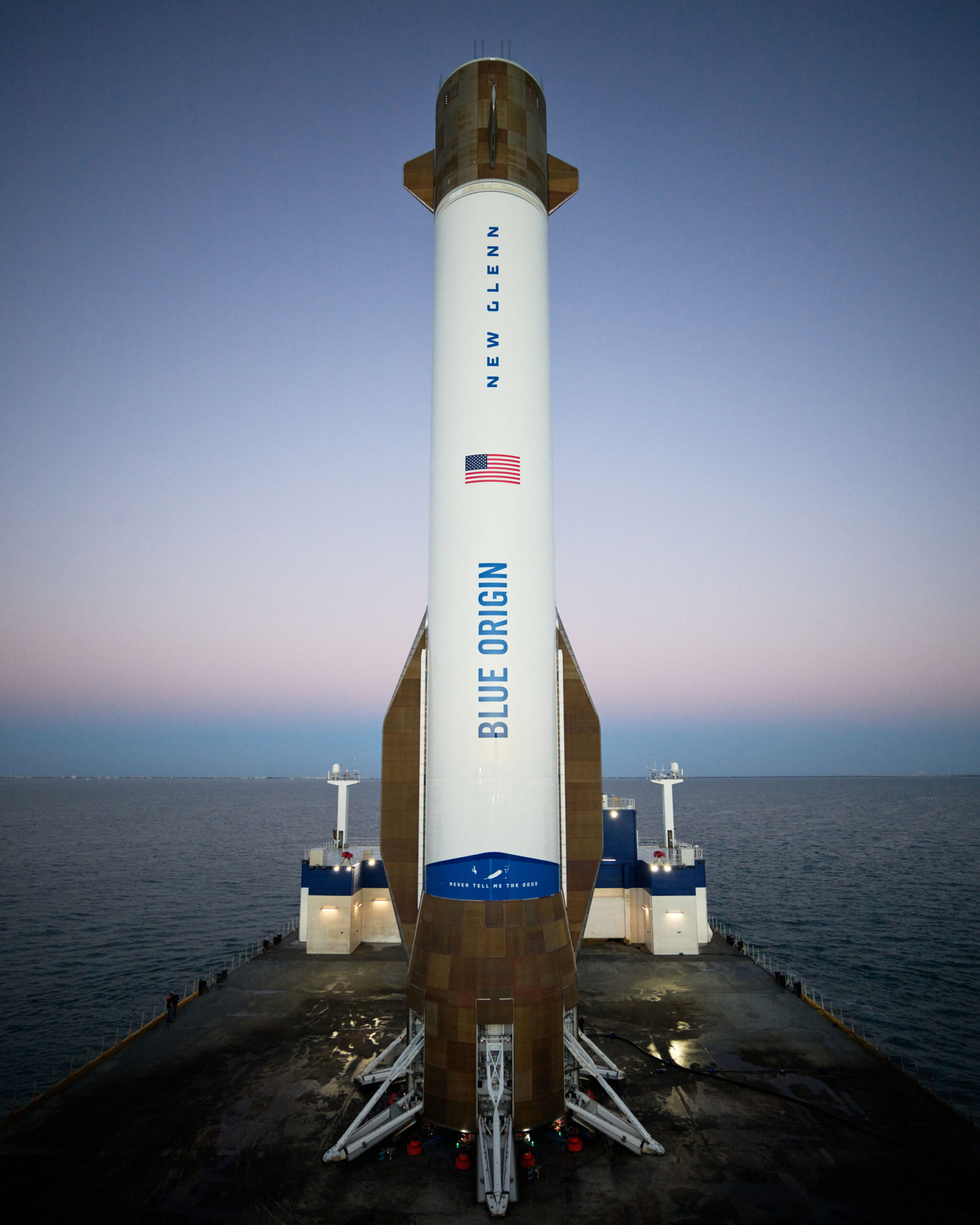
Incentives at work in Greater Seattle
See how businesses and institutions have benefited from Washington’s tax incentive programs. The examples below are drawn from the Washington State Department of Revenue’s 2025 Annual Tax Incentive Survey.
The Boeing Corporation
Aerospace pre-production B&O credit
Microsoft Corporation
Data center & use tax exemption
University of Washington
Research machinery & equipment exemption
Amazon.com
High Technology Sales & Use Tax Deferral
Ready to take advantage of everything Greater Seattle has to offer?