

The Greater Seattle Space Economy: Competitive Position, Industry Assets, Workforce, and Growth Opportunities
Greater Seattle’s commercial space economy generates an estimated $8.1 billion in direct economic output and supports approximately 34,200 jobs, positioning the region as a major U.S. center for satellite manufacturing, spacecraft development, and emerging space technologies.
According to The Greater Seattle Space Economy, a 2026 research report by Greater Seattle Partners, the region’s competitive advantage lies at the intersection of aerospace manufacturing and advanced technology. Decades of aircraft production expertise, combined with globally significant capabilities in cloud computing, artificial intelligence (AI), software, and automation, have created a distinctive commercial space ecosystem.
Washington state manufactured 68% of all active satellites in Earth orbit, demonstrating its importance to the global satellite industry. Greater Seattle also has the second-largest broad aerospace workforce among nine benchmark U.S. metropolitan areas, with 115,130 jobs.
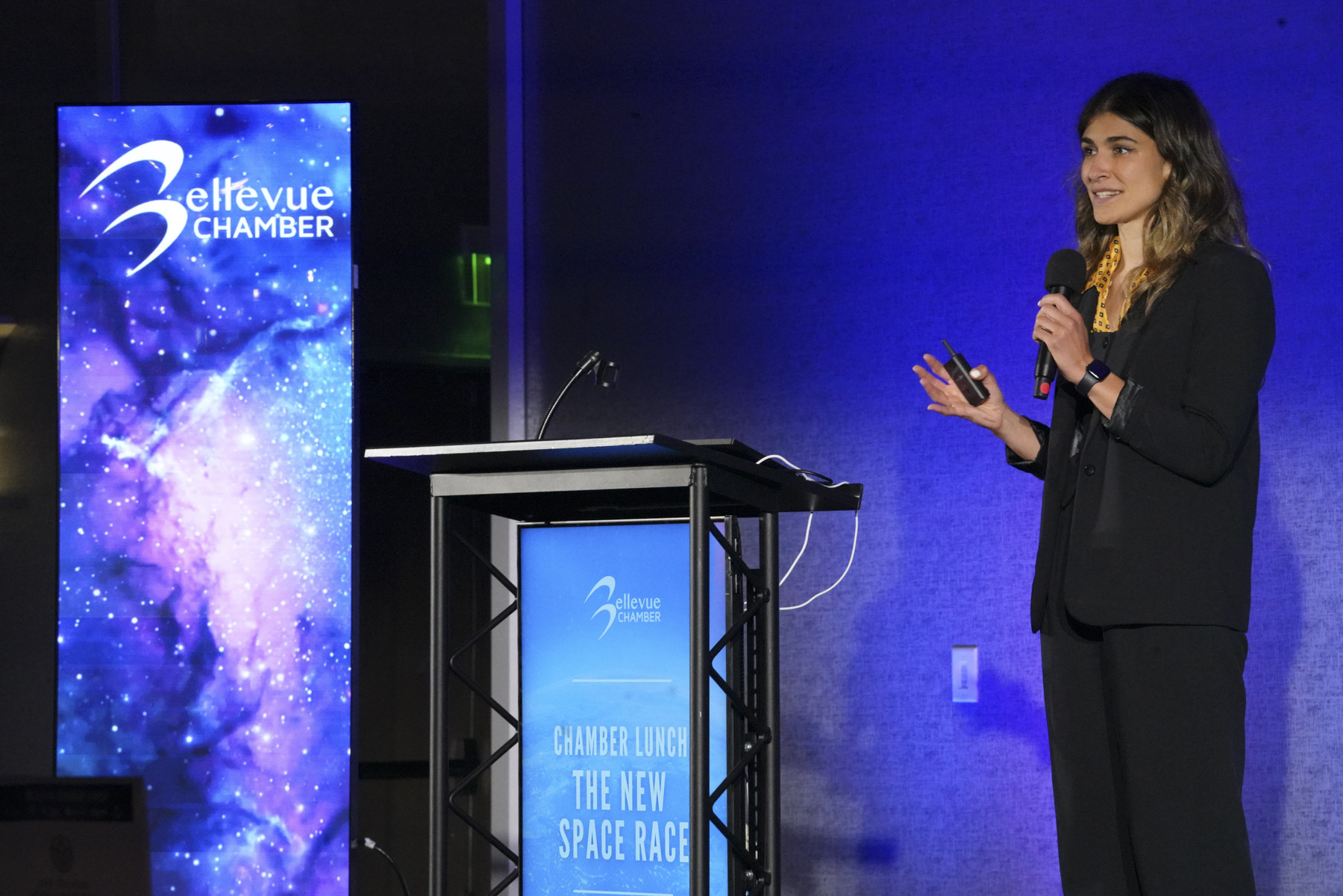
Authored by Greater Seattle Partners Research Director Victoria DePalma, Ph.D., the report examines the region’s space industry, workforce, startup investment, federal contracts, business expansion activity, and opportunities for future growth.
The economic output and space-supported employment figures are preliminary estimates from Space Northwest. Employment includes direct, indirect, and induced jobs.
Download the Full 2026 Greater Seattle Space Economy Report
Greater Seattle Space Economy: Key Findings
Greater Seattle’s space economy is distinguished by its manufacturing scale, specialized workforce, commercial space companies, and integration with the region’s technology sector.
| Economic Indicator | Greater Seattle Space Economy |
|---|---|
| Direct space economic output | $8.1 billion |
| Total space-supported employment | 34,200 jobs |
| Active satellites manufactured in Washington state | 68% of those in Earth orbit |
| Broad aerospace workforce | 115,130 jobs |
| Space vehicle manufacturing employment | 5,456 jobs |
| Space-focused startups founded since 2016 | 16 |
| Recorded space startup funding | $3.48 billion |
| Identified 2026 federal contract awards | $143.9 million |
Sources: Space Northwest preliminary 2026 findings; Lightcast Industry Snapshot Reports, Q3 2026; Crunchbase Startup Report, September 2026; and federal award announcements documented in the full report. The broad aerospace workforce includes aviation-related employment and should not be interpreted as direct space industry employment. Federal award values represent announced contract values or ceilings, not necessarily expenditures.
Why Greater Seattle Is a Leading U.S. Space Industry Hub
Greater Seattle’s principal competitive advantage is the convergence of two major industries: aerospace manufacturing and advanced technology.
Boeing’s longstanding regional presence has established deep expertise in aerospace engineering, advanced manufacturing, production systems, quality assurance, and specialized suppliers. At the same time, Amazon, Microsoft, and the broader technology ecosystem provide capabilities in cloud computing, artificial intelligence, cybersecurity, software development, and data infrastructure. Modern commercial space systems increasingly depend on both. Satellite constellations, autonomous spacecraft, orbital computing infrastructure, and advanced propulsion systems require sophisticated manufacturing alongside software, connectivity, and data-processing capabilities.
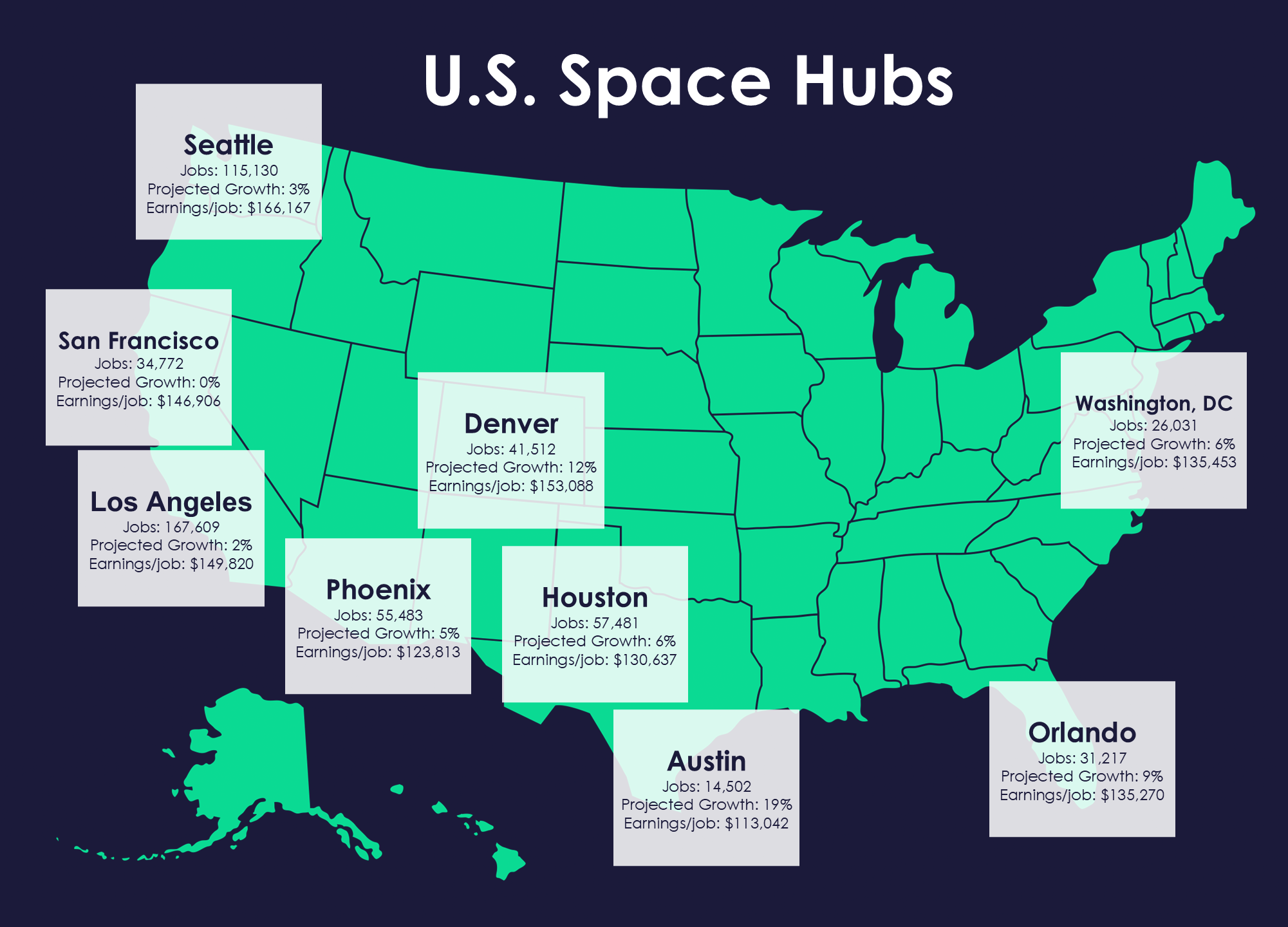
Unlike launch-centered markets such as Orlando or human-spaceflight-focused Houston, Greater Seattle’s strengths are concentrated in satellite production, spacecraft engineering, propulsion, orbital technologies, and the digital systems that support space operations.
The region’s leading space industry segments include:
- Satellite manufacturing and connectivity: High-volume satellite production, communications systems, and broadband infrastructure.
- Propulsion and launch-system engineering: Rocket engines, propulsion technologies, and launch vehicle development.
- Advanced spacecraft and orbital mobility: Autonomous spacecraft, satellite servicing, maneuverability, and in-space logistics.
- Orbital computing and AI: Space-based data processing, autonomous systems, and emerging orbital computing infrastructure.
- Advanced manufacturing and testing: Specialized aerospace suppliers, electronics, engineering, and production capabilities.
| What Differentiates Greater Seattle | |
| Competitive Advantage | Why It Matters |
| Aerospace Manufacturing Depth | Greater Seattle has one of the nation’s deepest commercial aerospace ecosystems, providing production know-how, quality systems, technical labor, and supplier capabilities relevant to commercial space manufacturing. |
| Concentrated Satellite Production | Amazon Leo and SpaceX/Starlink reinforce regional depth in satellite production, RF systems, electronics, automation, operations, and specialized talent. |
| Cloud, Software, and AI Capability | Greater Seattle combines a major aerospace base with significant capabilities in cloud computing, software, AI, cybersecurity, and digital engineering, increasingly important to modern spacecraft and mission systems. |
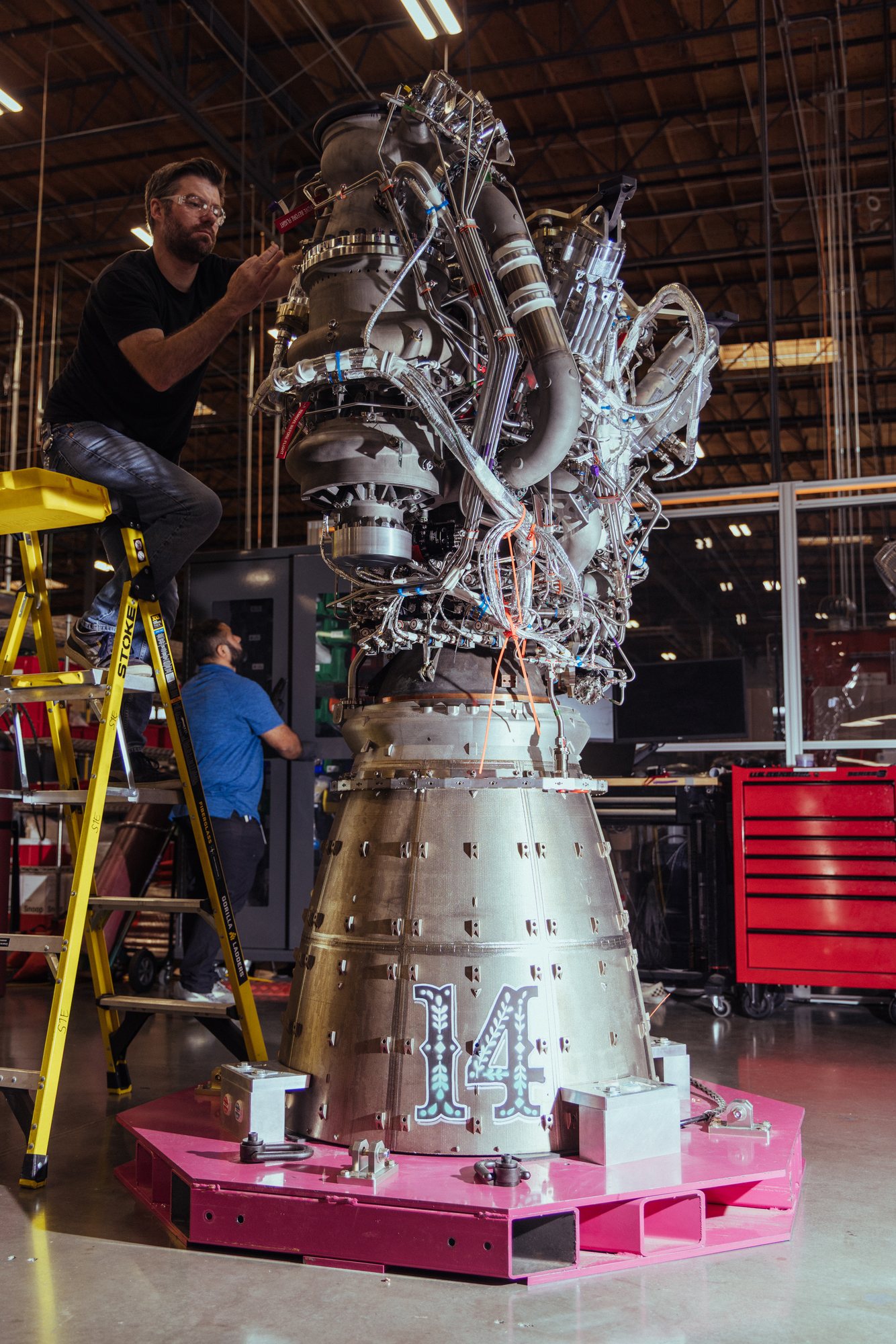
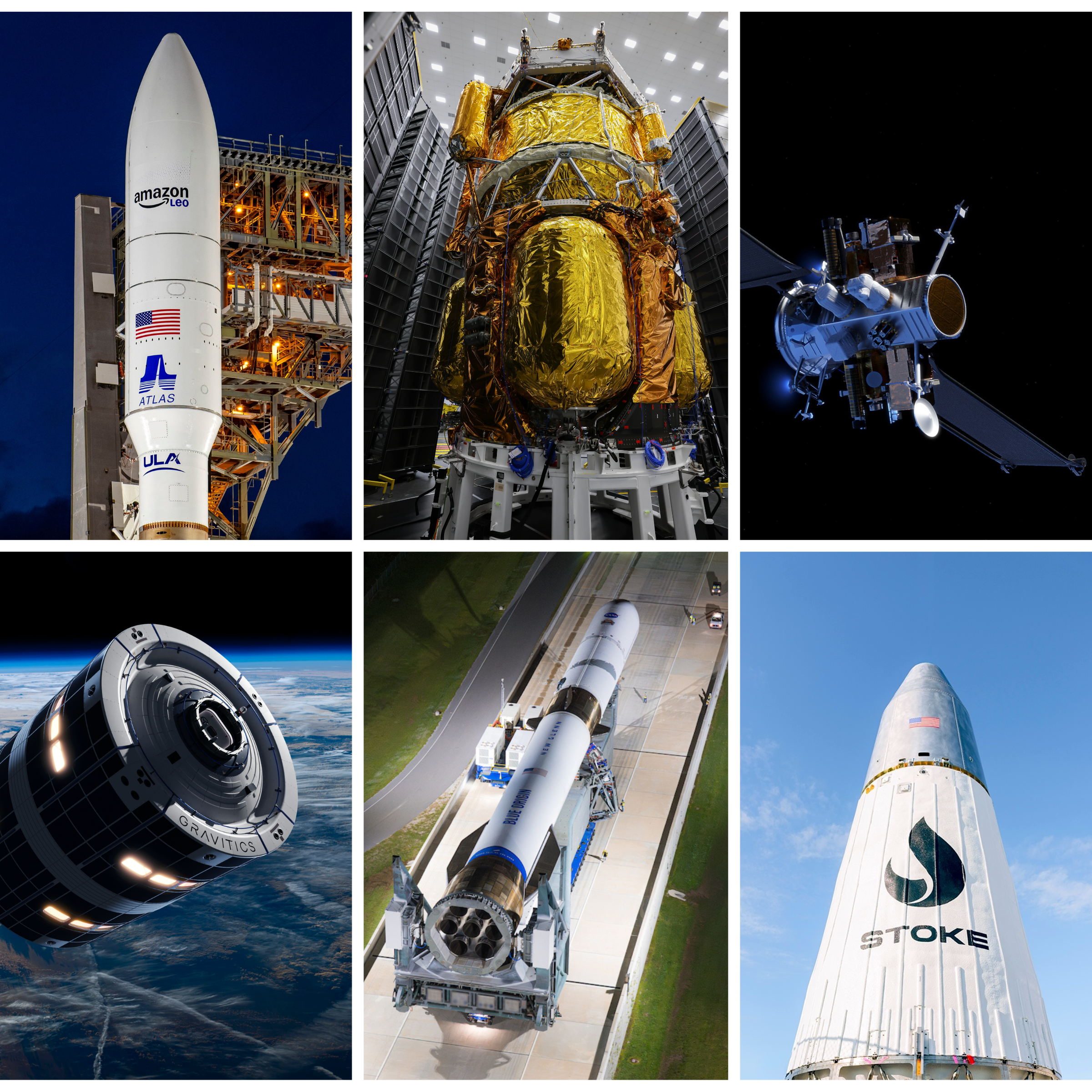
| Diversified Emerging Space Portfolio | Companies including Stoke Space, Starfish Space, Portal Space Systems, Starcloud, Hubble Network, and Kapta Space broaden the regional ecosystem across orbital mobility, servicing, computing, sensing, communications, and other emerging applications. |
| Mature Supplier and Technical Services Ecosystem | Decades of aerospace activity have created regional depth in materials, electronics, machining, engineering, testing, design, and other specialized services that can support space companies as they scale. |
Greater Seattle’s Commercial Space Companies
Greater Seattle is home to established aerospace companies and an expanding network of commercial space businesses developing satellites, spacecraft, propulsion systems, and orbital technologies.
Major industry participants include Amazon Leo, SpaceX/Starlink, Blue Origin, Boeing, and Stoke Space. Amazon Leo and SpaceX/Starlink lead the region’s satellite manufacturing and connectivity. Blue Origin, Rocketdyne, and Stoke Space building propulsion and launch-system engineering capabilities.
An emerging group of companies is expanding the region’s commercial space portfolio. Starfish Space and Portal Space Systems are developing spacecraft capabilities for orbital servicing, mobility, and autonomous operations. Hubble Network is advancing satellite connectivity, Starcloud and Sophia Space are exploring opportunities in orbital computing and related infrastructure.
Greater Seattle Space Startups Attract $3.48 Billion in Funding
Greater Seattle’s commercial space startup ecosystem demonstrates a high degree of specialization. According to the report, 16 of the 25 aerospace startups identified in Greater Seattle and founded between 2016 and 2026 are primarily space-focused. These companies represent 64% of the region’s identified aerospace startup cohort but account for approximately 93.5% of its recorded funding. These 16 space-focused startups have attracted approximately $3.48 billion in recorded funding, placing Greater Seattle third among the nine benchmark metropolitan areas, behind Los Angeles and Denver.
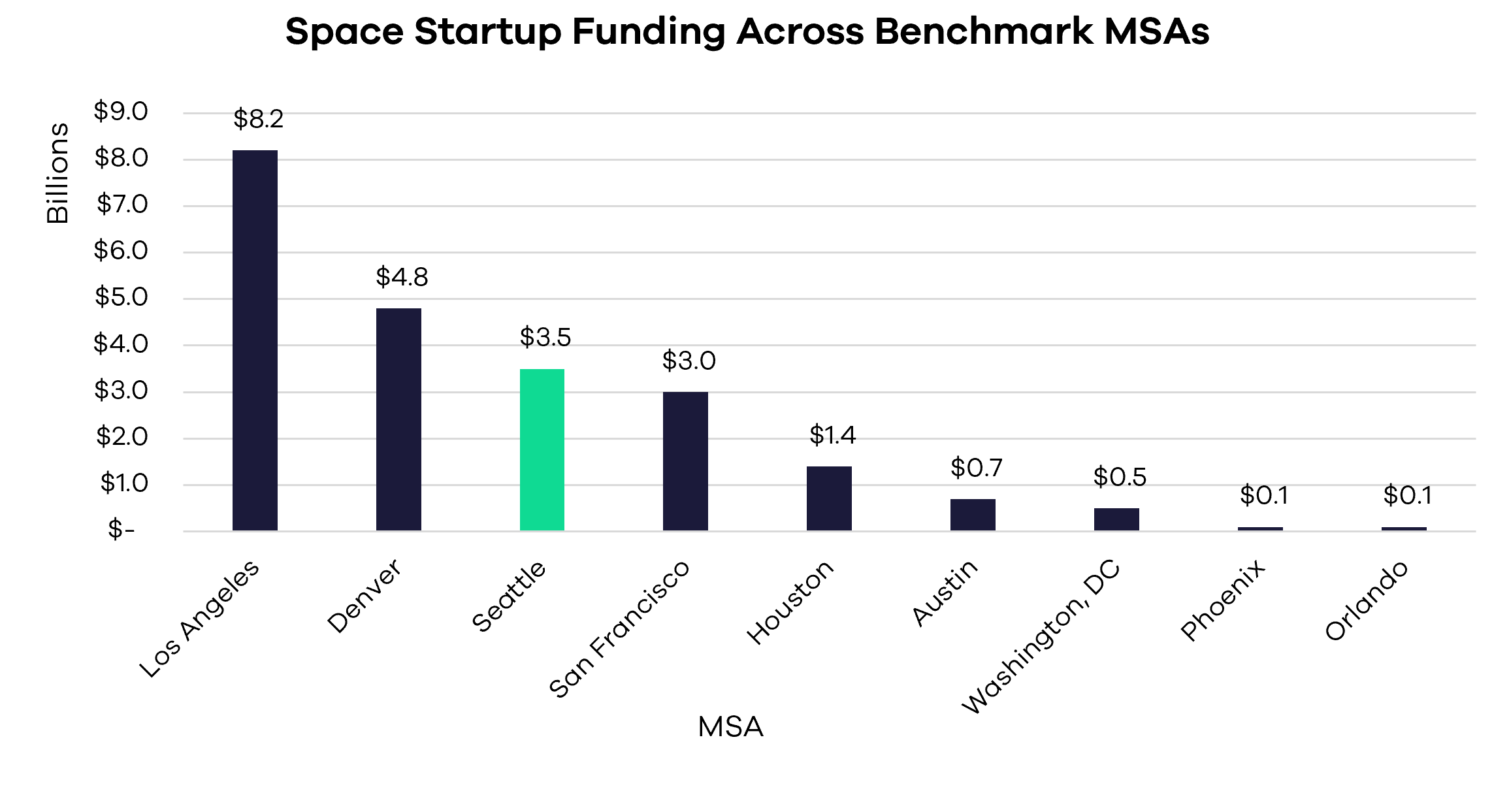
Source: Crunchbase Startup Report, September 2026, with selected 2026 company and investor announcements used as cross-checks. Funding figures represent disclosed or database-recorded amounts rather than audited cumulative company totals.
Investment spans multiple commercial space technologies, including spacecraft development, propulsion, satellite communications, orbital servicing, and computing.
Among the region’s leading funded space startups:
- Stoke Space: Approximately $2.3 billion in recorded funding.
- Starcloud: Approximately $450 million.
- Hubble Network: Approximately $290.5 million.
- Starfish Space: Approximately $174.6 million.
- Portal Space Systems: Approximately $70.5 million.
Funding figures are based on Crunchbase data and selected company announcements through September 2026. They represent disclosed or database-recorded funding rather than audited cumulative company totals.
Space Companies Expanding in Greater Seattle
Greater Seattle’s commercial space industry is translating investment and innovation into new engineering operations, manufacturing facilities, and business expansion activity. Recent company decisions illustrate the region’s attractiveness for commercial space investment.
- Cowboy Space, a California-based company developing rockets and orbital AI data centers, established a Seattle-area engineering center in 2026 and subsequently leased a 291,035-square-foot industrial facility in Kent.
- K2 Space selected the Greater Seattle region for a new engineering operation focused on flight software, autonomy, and satellite systems.
- Starcloud is establishing production lines for orbital data center spacecraft at a 100,000-square-foot manufacturing facility in Woodinville. The company relocated from Southern California to Redmond, citing the region’s concentration of satellite mass-production expertise.
- Portal Space Systems is expanding spacecraft production capacity in Bothell.
- Zeno Power is growing its Seattle workforce and evaluating additional headquarters space.
They also highlight emerging opportunities for companies developing orbital computing, autonomous spacecraft, satellite servicing, and other next-generation space technologies.
Aerospace Workforce and Talent Development
Greater Seattle’s established aerospace workforce provides a significant competitive advantage for commercial space companies. The region supports 115,130 broad aerospace jobs, the second-largest workforce among the nine metropolitan areas examined in the report, behind Los Angeles.
Within the more specialized Guided Missile and Space Vehicle Manufacturing industry, Greater Seattle supports 5,456 jobs and has an industry concentration approximately 4.8 times the national average. This manufacturing foundation provides commercial space companies with access to aerospace engineers, technicians, production specialists, suppliers, and other highly specialized talent.
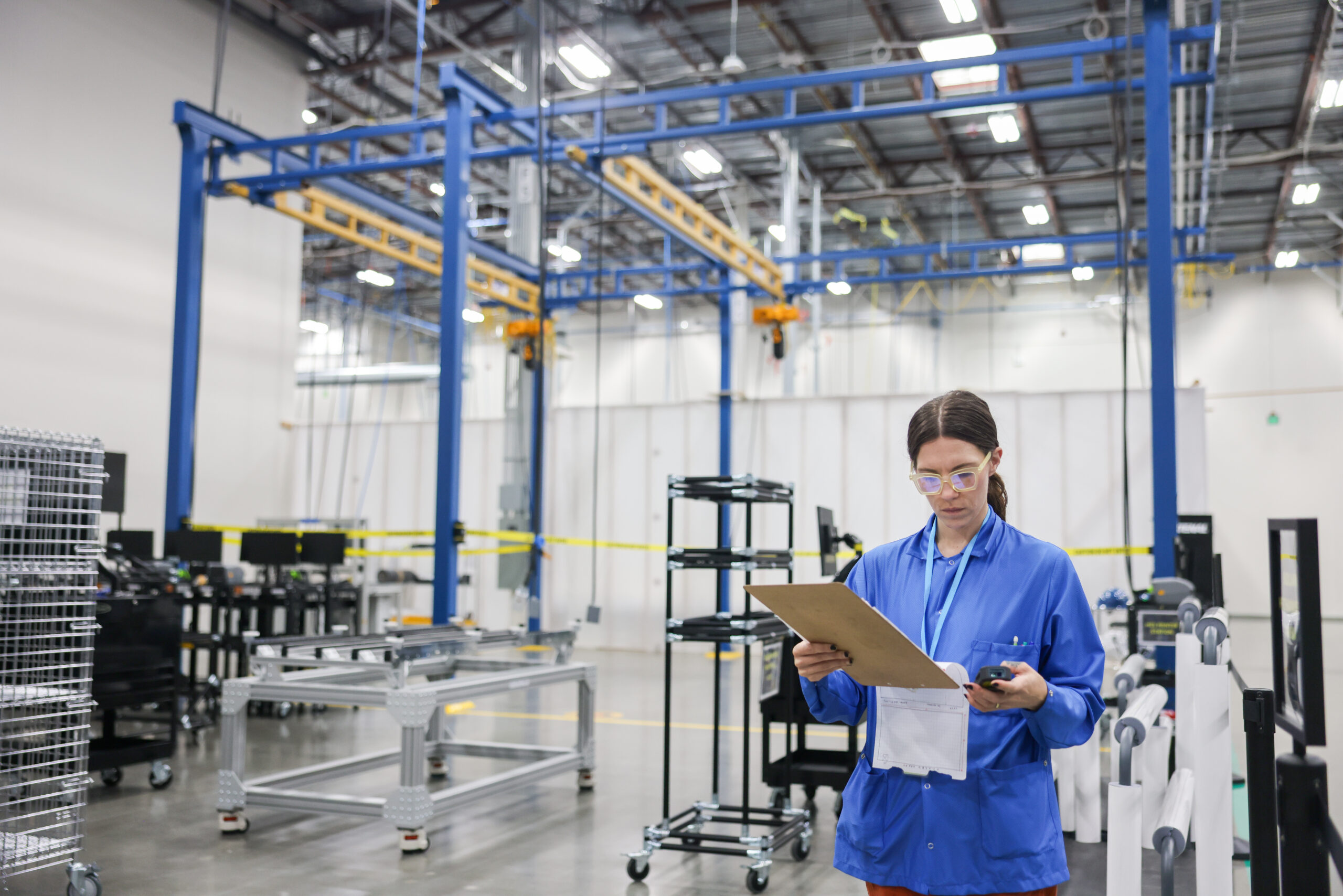
The region’s workforce development ecosystem includes universities, community and technical colleges, apprenticeship programs, and employer-supported training initiatives. Examples include the Lake Washington Institute of Technology and Amazon Leo satellite technician program, Boeing’s workforce pathways, Everett Community College’s Advanced Manufacturing Training and Education Center, and aerospace apprenticeship programs. Expanding these talent pipelines will be important as commercial space companies increase manufacturing capacity and develop increasingly sophisticated spacecraft technologies.
| Benchmark Workforce Comparison | ||||
| MSA | Jobs | Past Growth | Projected Growth | Earnings/job |
| Los Angeles | 167,609 | 1% | 2% | $149,820 |
| Seattle | 115,130 | 6% | 3% | $166,167 |
| Houston | 57,481 | 23% | 6% | $130,637 |
| Denver | 41,512 | 27% | 12% | $153,088 |
| San Francisco | 34,772 | 12% | 0% | $146,906 |
| Orlando | 31,217 | 26% | 9% | $137,270 |
| Washington, DC | 26,031 | 24% | 6% | $135,453 |
| Austin | 14,502 | 39% | 19% | $113,042 |
| Phoenix | 55,483 | 12% | 5% | $123,813 |
Note: Earnings per job are nominal, reflect differences in industry and occupational mix, and are not cost-of-living adjusted; cross-metro differences should not be interpreted as direct like-for-like labor-cost comparisons. Source: Lightcast Industry Snapshot Reports, Q3 2026 dataset. All reports use the same 36-industry aerospace definition and MSA geography.
Federal Contracts Support Greater Seattle’s Space Industry
Federal demand is becoming an increasingly important complement to private investment in Greater Seattle’s commercial space economy. The report identifies at least $143.9 million in publicly announced 2026 federal contract awards to Greater Seattle-based space companies.
| Identified 2026 Federal Awards to Greater Seattle-Based Firms | ||
| Regional company | Federal customer / program | Identified federal value |
| Starfish Space | Space Development Agency / U.S. Space Force | $52.5M |
| Starfish Space | U.S. Space Force / APFIT | $54.5M |
| Gravitics | U.S. Space Force / SpaceWERX STRATFI | $30.0M |
| Interlune | NASA SBIR Phase III | $6.9M |
| Identified 2026 regional baseline | $143.9M | |
The total represents a conservative baseline of identified regional awards rather than a comprehensive estimate of federal space spending. Sources: Starfish Space (2026b, 2026c); U.S. Securities and Exchange Commission filing for Gravitics (2026); NASA (2026a). Values are announced/current contract values or ceilings and should not be interpreted as obligations or expenditures. See Appendix B.
Blue Origin’s September 2026 selection by NASA to develop the Mars Telecommunications Network shows federal demand for capabilities associated with regional space companies. The contract has a maximum potential value of approximately $700 million, but the full amount is excluded from the regional baseline because the Greater Seattle share of the work has not been established.
Continuing to build strong relationships with NASA, the U.S. Space Force, the Department of Defense, and other federal customers represents an important opportunity for Greater Seattle’s space industry.
Commercial Space Industry Growth Opportunities Through 2035
The global space economy is expected to expand significantly over the next decade. The World Economic Forum and McKinsey & Company project that the global space economy could reach approximately $1.8 trillion by 2035, compared with $630 billion in 2023. Other industry forecasts anticipate a more conservative growth trajectory.
For Greater Seattle, the promising areas for future investment and business development include orbital mobility and servicing, responsive spacecraft, orbital computing and AI infrastructure, autonomous space systems, and advanced manufacturing suppliers entering commercial space markets. Orbital computing is a particularly relevant opportunity because it combines the region’s established strengths in spacecraft manufacturing, cloud infrastructure, artificial intelligence, and data systems. However, continued growth will depend on addressing several competitive challenges, including specialized workforce availability, industrial facility capacity, infrastructure, operating costs, incentive competitiveness, and access to federal customers.
Strategic Priorities for Greater Seattle’s Space Economy
The report identifies three priorities for the Greater Seattle region’s long-term competitive position to capitalize on commercial space growth while maintaining a competitive environment for business investment.
1. Scale the regional space ecosystem. Expand specialized workforce training, strengthen supplier capabilities, protect industrial and testing infrastructure, and evaluate the competitiveness of Washington’s business incentives and support programs.
2. Strengthen Greater Seattle’s national and international market position. Promote the region’s distinctive combination of aerospace manufacturing and technology capabilities, expand federal customer relationships, and support emerging commercial space industries.
3. Build a stronger evidence base. Improve the measurement of space industry employment, investment, company activity, federal contracts, and economic impact to support regional economic development strategies.
The Future of Greater Seattle’s Commercial Space Industry
Greater Seattle’s future in commercial space will be shaped by its ability to combine established aerospace capabilities with emerging technologies. The region does not need to replicate the launch infrastructure of Orlando, the human spaceflight specialization of Houston, or the broader commercial space manufacturing ecosystem of Los Angeles. Its competitive advantage lies in the convergence of advanced aerospace manufacturing, satellite production, spacecraft engineering, cloud computing, artificial intelligence, and a mature technical supply chain.
As commercial space companies expand manufacturing operations, attract investment, and develop new technologies, Greater Seattle is positioned to play an important role in the next generation of the global space economy.
Download the Full Greater Seattle Space Economy Report
Explore the complete research, including national metropolitan comparisons, workforce data, startup investment, federal contracts, industry assets, growth opportunities, and strategic recommendations.
Download the Full 2026 Space Economy Report
Frequently Asked Questions
About the Research
The Greater Seattle Space Economy was researched and authored by Victoria DePalma, Ph.D., Research Director at Greater Seattle Partners. The report examines the region’s commercial space industry, workforce, startup investment, competitive position, and growth opportunities.
Research methodology: This article summarizes findings from Greater Seattle Partners’ 2026 space economy research. Sources include Lightcast Industry Snapshot Reports (Q3 2026), Crunchbase Startup Report (September 2026), preliminary findings from Space Northwest’s 2026 Washington Space Economic Impact Report, and publicly announced federal contract awards. Unless otherwise noted, company and industry information reflects data available through September 24, 2026.
Ready to take advantage of everything Greater Seattle has to offer?