

Greater Seattle Trade Overview 2025: Global Trade, Exports, and Logistics Advantage
International Trade and Global Connectivity
Greater Seattle serves as one of the United States’ most important gateways to international markets and global commerce. Supported by world-class ports, international air cargo facilities, rail infrastructure, and direct access to Asia-Pacific shipping routes, the region facilitates billions of dollars in trade annually across aerospace, advanced manufacturing, technology, and consumer goods.
In 2025, total trade activity in the Greater Seattle region reached $117.8 billion, increasing from $114.4 billion in 2024. This growth is the result of continued integration into global supply chains. The region’s trade performance is driven by strong export growth. Total exports reached $47.5 billion in 2025, representing an increase of approximately 17.5% year-over-year. Meanwhile, imports totaled $70.3 billion, reflecting continued demand for industrial equipment, technology products, and consumer goods that support regional businesses and supply chains.
Greater Seattle Trade by the Numbers
- $117.8B Total Trade
- $47.5B Exports
- $70.3B Imports
- 17.5% Export Growth
- Closest U.S. Metro to Asia by Sea
2025 Total Trade
2025 Total Exports
2025 Total Imports
Top Trade Partners:
China, Japan, South Korea,
Taiwan, Vietnam
Top Export:
Aircraft,
Spacecraft & Parts
Top Import
Industrial Machinery &
Computers
| 2025 Total Trade – $117,752,534,114 (2024: $114,445,735,285) | 2025 Total Exports – $47,495,051,112 (2024: $40,416,239,231) | 2025 Total Imports – $70,257,483,002 (2024: $74,045,818,944) |
|---|---|---|
| Top Total Trade Commodities | Top Export Commodities | Top Import Commodities |
| 1. Aircraft, Spacecraft, & Parts | 1. Aircraft, Spacecraft, & Parts | 1. Industrial Machinery, Including Computers |
| 2. Industrial Machinery, Including Computers | 2. Electric Machinery; Sound & TV Equipment | 2. Electric Machinery; Sound & TV Equipment |
| 3. Electric Machinery; Sound & TV Equipment | 3. Industrial Machinery, Including Computers | 3. Vehicles, Except Railway or Tramway, & Parts |
Exports remain a cornerstone of the regional economy. In 2025, Greater Seattle exported $47.5 billion in goods, a significant increase from $40.4 billion in 2024. The region’s export profile is led by advanced manufacturing and technology products, with aircraft and aerospace components serving as the region’s top export category, reflecting the global presence of the aerospace industry and its extensive supply chain.
Other major export categories include electric machinery and electronic equipment, as well as industrial machinery and computer-related technologies; our regional strengths in advanced manufacturing and technology industries.
Imports continue to play an important role in supporting regional supply chains and consumer markets. In 2025, Greater Seattle imported $70.3 billion in goods, slightly lower than the $74.0 billion recorded in 2024. The region’s imports are dominated by industrial machinery and computer equipment, followed by electrical machinery and electronics, and motor vehicles and parts.
| Top 2025 Total Trade Partners | Top 2025 Export Partners | Top 2025 Import Partners |
|---|---|---|
| 1. China | 1. China | 1. China |
| 2. Japan | 2. Japan | 2. Japan |
| 3. South Korea | 3. South Korea | 3. Vietnam |
| 4. Taiwan | 4. Germany | 4. Taiwan |
| 5. Vietnam | 5. Malaysia | 5. South Korea |
Greater Seattle’s global trade relationships are concentrated across the Asia-Pacific region, as the region is a major gateway between the United States and international markets. In 2025, the region’s top overall trade partners were China, Japan, South Korea, Taiwan, and Vietnam. China and Japan were also the region’s leading export destinations, alongside South Korea, Germany, and Malaysia.
On the import side, the region’s largest trading partners included China, Japan, Vietnam, Taiwan, and South Korea, highlighting strong supply chain connections with key manufacturing economies across Asia. Greater Seattle is a global economic hub that supports regional industries and connects local businesses to international markets.
Trade and Logistics Advantage
Greater Seattle’s strategic location on the Pacific Rim positions the region as one of North America’s most important gateways to international markets. With direct access to Asia-Pacific trade routes and world-class transportation infrastructure, the region plays a central role in global supply chains connecting the United States with major economic centers across Asia and Europe.
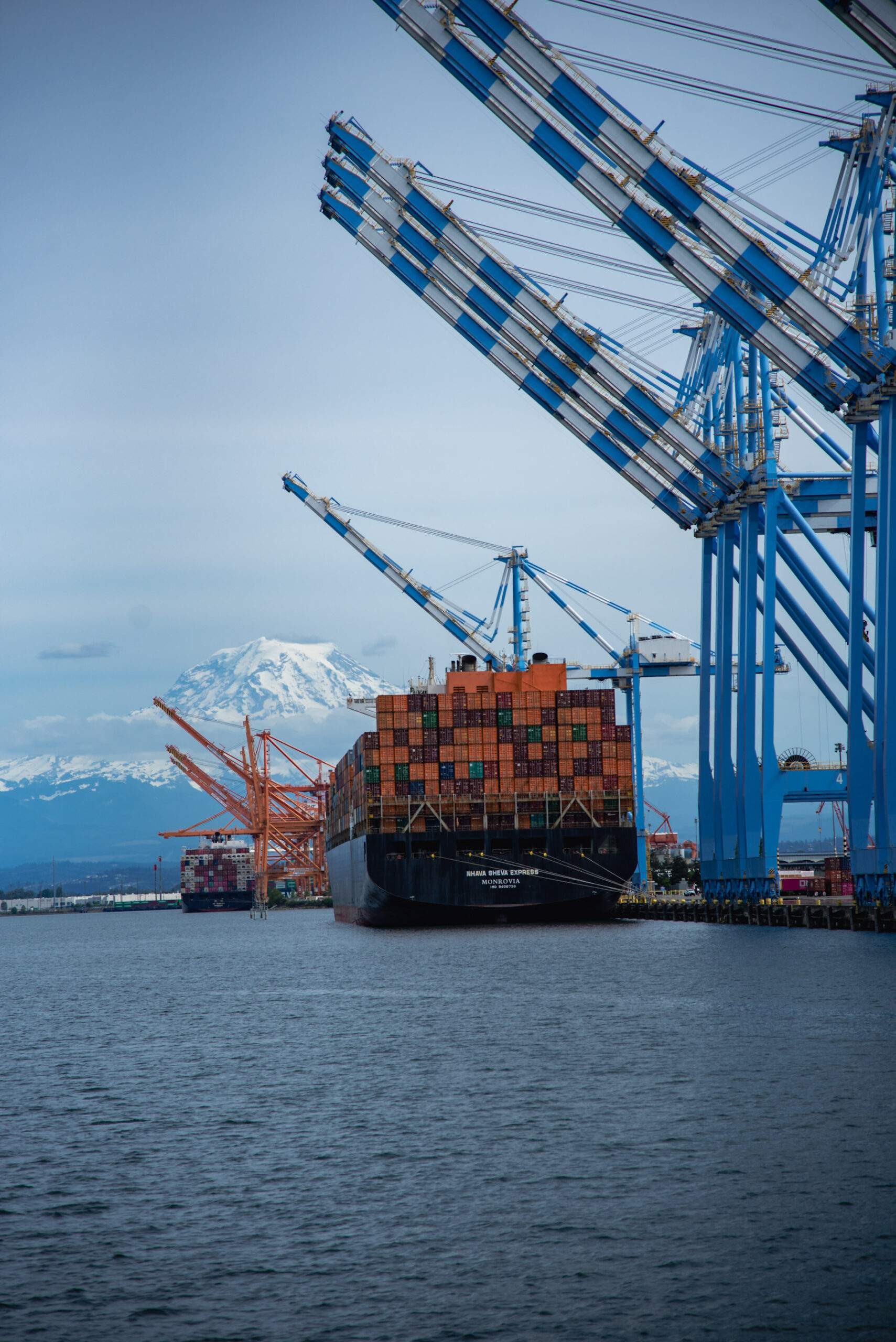
The region’s logistics network is anchored by The Northwest Seaport Alliance, which combines the maritime operations of the Ports of Seattle and Tacoma into one of the largest container gateway systems in North America. Complementing this network is the Port of Everett, a key hub for aerospace logistics, oversized cargo, maritime commerce, and industrial development. These deep-water ports accommodate some of the world’s largest cargo vessels, including ships carrying more than 24,000 twenty-foot equivalent units (TEUs), and provide efficient access to international shipping lanes, interstate highways, inland distribution centers, and national rail networks.
Why 24,000+ TEUs?
The Northwest Seaport Alliance’s terminals can accommodate the latest ultra-large container vessels in the 24,000+ TEU class, which are currently among the largest cargo ships operating globally.
Air cargo infrastructure is another important factor to the region’s global connectivity. Seattle-Tacoma International Airport (SEA) serves as a major international passenger and cargo hub, connecting businesses to destinations across North America, Asia, and Europe while supporting time-sensitive freight and global supply chain operations. Seattle Paine Field International Airport complements the region’s transportation network through its proximity to Boeing’s widebody aircraft manufacturing facilities, aerospace suppliers, advanced manufacturing operations, and industrial employers.
Greater Seattle’s logistics advantage is in its proximity to major international markets. The region is the closest major U.S. metropolitan area to Asia by sea, reducing shipping times and providing companies with faster access to Asia-Pacific markets. Combined with a highly skilled workforce, advanced manufacturing base, and innovation-driven economy, this geographic advantage continues to attract global companies seeking efficient access to international trade, logistics, and supply chain networks.
Source: WISERTrade, 2026.
The report was researched and written by Dr. Victoria DePalma, Greater Seattle Partners Research Director.

Other 2025 Greater Seattle Region Reports:
King County Economic Overview 2025
Pierce County Economic Overview 2025
Snohomish County Economic Overview 2025
Foreign Direct Investment Overview 2025
Greater Seattle Startup Funding and Venture Capital Trends 2025
Greater Seattle Aerospace Industry in 2025
Ready to take advantage of everything Greater Seattle has to offer?