

Pierce County Economic Overview 2025: Workforce, Industry, and South Sound Growth
Regional Economic Snapshot
Pierce County is a major economic center within the Puget Sound region and the broader South Sound economy. Supported by strong workforce growth, logistics infrastructure, healthcare systems, military presence, and business expansion, the county remains an increasingly attractive destination for residents, employers, and investment across the Pacific Northwest.
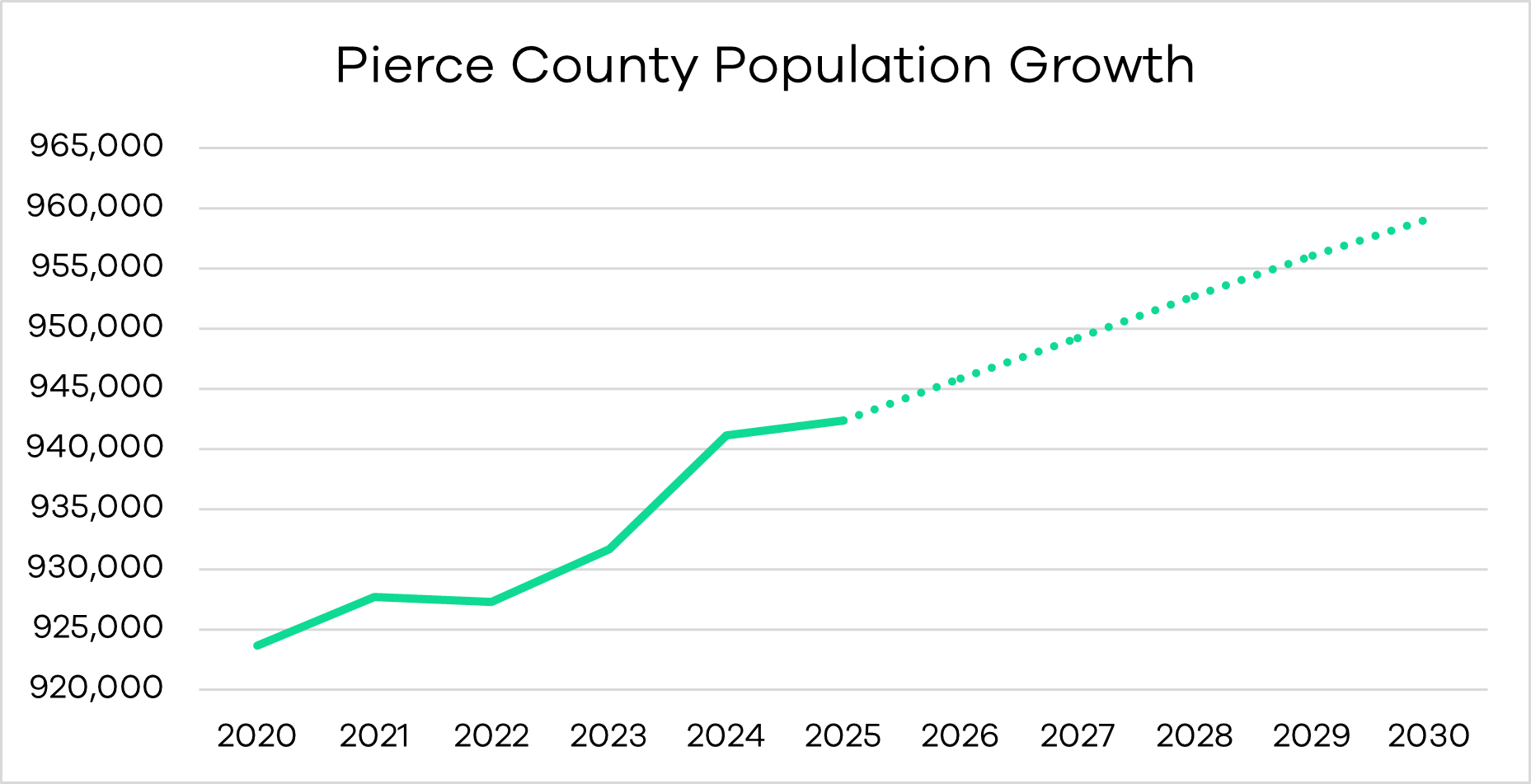
As of 2025, Pierce County’s population reached 942,394 residents, demonstrating a steady growth and increasing regional significance within the Puget Sound area. The Pierce County economy supports more than 416,000 jobs and continues to expand across government, healthcare, transportation and warehousing, retail, construction, and professional services industries.
Median household income reached $96,600, significantly above the national median, reflecting rising household earnings, workforce growth, and continued economic expansion across the South Sound economy.
2025 Population
Total Employment
Median Household Income
Labor Force Participation
Millennial Workforce
Businesses
Employment and Labor Market Trends
Pierce County’s labor market has demonstrated strong recovery and long-term resilience in recent years. Between 2020 and 2025, employment increased by 8.9%, adding nearly 34,000 jobs across the county. Continued growth is projected through the end of the decade, with forecasts indicating an additional 23,761 jobs by 2030.
Labor force participation improved from 65.2% in 2020 to approximately 68% in 2025, reflecting stronger workforce engagement and economic activity throughout the county. Meanwhile, the unemployment rate declined significantly from 9.44% in 2020 to approximately 5.49% by late 2025, demonstrating continued economic recovery and labor market stability. Strong labor market fundamentals continue to support Pierce County’s position as a growing employment center within the Greater Seattle region.
Key Industries Driving the Pierce County Economy
The Pierce County economy is supported by a diverse mix of public sector employment, logistics infrastructure, healthcare systems, construction activity, retail, and service industries. The county also plays a critical role in regional transportation, supply chains, military operations, and workforce development across the South Sound.
Major employment sectors include:
- Accommodation and Food Services
- Construction
- Federal Government and Military
- Health Care and Social Assistance
- Retail Trade
- Transportation and Warehousing
Joint Base Lewis-McChord remains one of the county’s largest economic drivers and one of the most significant military installations in the United States. The base supports regional employment, defense operations, logistics activity, and long-term economic stability across the South Sound.
Pierce County’s logistics and trade economy is further strengthened by the Port of Tacoma and The Northwest Seaport Alliance, one of the largest container gateway systems in North America. Together, they support international trade, freight mobility, warehousing, manufacturing, and supply chain activity throughout the Greater Seattle region and the Pacific Northwest.
Major employers include Amazon, Boeing, Joint Base Lewis-McChord, MultiCare Health System, Tacoma Public Schools, the State of Washington, and The Northwest Seaport Alliance, reflecting the county’s diverse economic foundation.
Population and Workforce Demographics
Pierce County benefits from a strong working-age population and increasing demographic diversity. The county is home to more than 215,000 millennials, significantly above the national average for similarly sized regions and an important contributor to workforce growth, entrepreneurship, and long-term economic vitality.
The county also maintains a substantial veteran population, with more than 79,000 veterans residing in the region. This reflects Pierce County’s long-standing connection to military service, national defense, and skilled workforce development. Educational and workforce development institutions across the county continue to support talent pipelines for healthcare, business, logistics, technical trades, and professional services industries.
Migration and Regional Connectivity
Pierce County continues to experience strong migration flows throughout the Puget Sound region. The largest inflow of residents comes from King County, Washington, with more than 16,600 residents relocating to Pierce County in 2022.
These migration trends reinforce Pierce County’s role as both a growing employment center and an increasingly attractive residential destination within the Greater Seattle metropolitan economy. Relative housing affordability, workforce access, and transportation connectivity continue to support population growth across the South Sound.
Business Environment and Innovation Ecosystem
Pierce County is home to more than 61,000 companies, supporting a diverse business ecosystem that includes healthcare systems, logistics firms, manufacturers, public sector institutions, retailers, and thousands of small businesses.
The majority of businesses employ fewer than 10 workers, demonstrating a strong entrepreneurial and small-business environment that contributes to local economic resilience and innovation.
The county’s strategic location along Interstate 5, access to the Port of Tacoma, and integration with regional transportation and warehousing infrastructure continue to support business expansion, industrial growth, and supply chain activity throughout the region.
Education and Workforce Pipeline
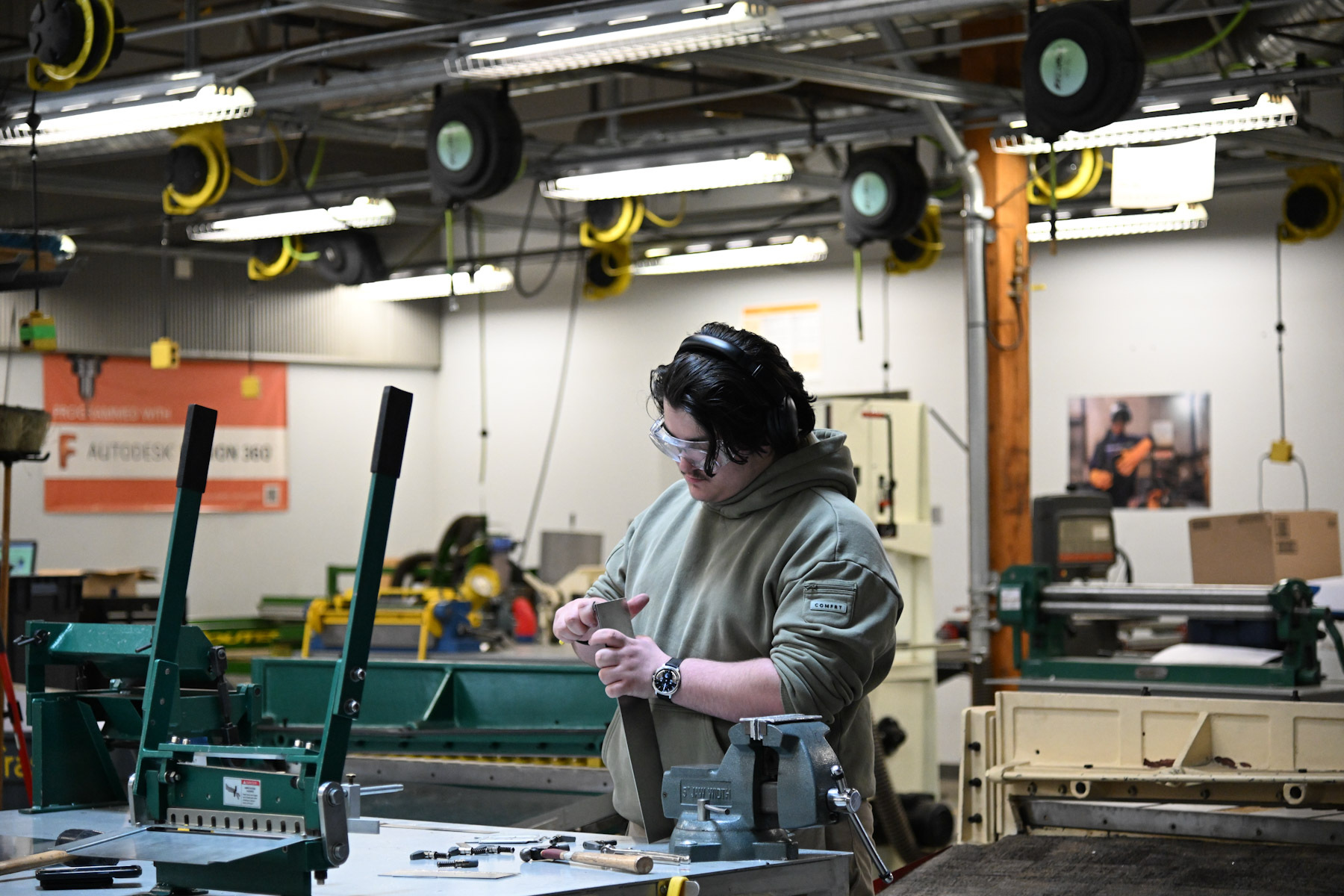
Pierce County maintains a strong workforce pipeline supported by colleges, universities, and technical education institutions throughout the region. In 2024, local institutions produced 9,615 graduates, led by Tacoma Community College, Pierce College District, the University of Washington Tacoma, and Clover Park Technical College.
These institutions help supply talent across healthcare, business, logistics, engineering, technical trades, and professional services, strengthening Pierce County’s long-term workforce competitiveness and economic growth potential.


Sources: Lightcast, 2026; Puget Sound Business Journal Book of Lists, 2026.
The report was researched and written by Dr. Victoria DePalma, Greater Seattle Partners Research Director.
Other 2025 Greater Seattle Region Reports:
2025 Greater Seattle Region Economic Overview
King County Economic Overview 2025
Snohomish County Economic Overview 2025
Greater Seattle Trade Overview 2025
Foreign Direct Investment Overview 2025
Greater Seattle Startup Funding and Venture Capital Trends 2025
Greater Seattle Aerospace Industry in 2025

Ready to take advantage of everything Greater Seattle has to offer?