

King County Economic Overview 2025: Innovation, Workforce, and Industry Growth
Regional Economic Snapshot
King County is one of the most competitive regional economies in the United States and serves as the economic center of the Greater Seattle region. With significant presence of global technology companies, advanced industries, research institutions, and a highly educated workforce, the county continues to drive innovation, investment, and job growth across the Pacific Northwest.
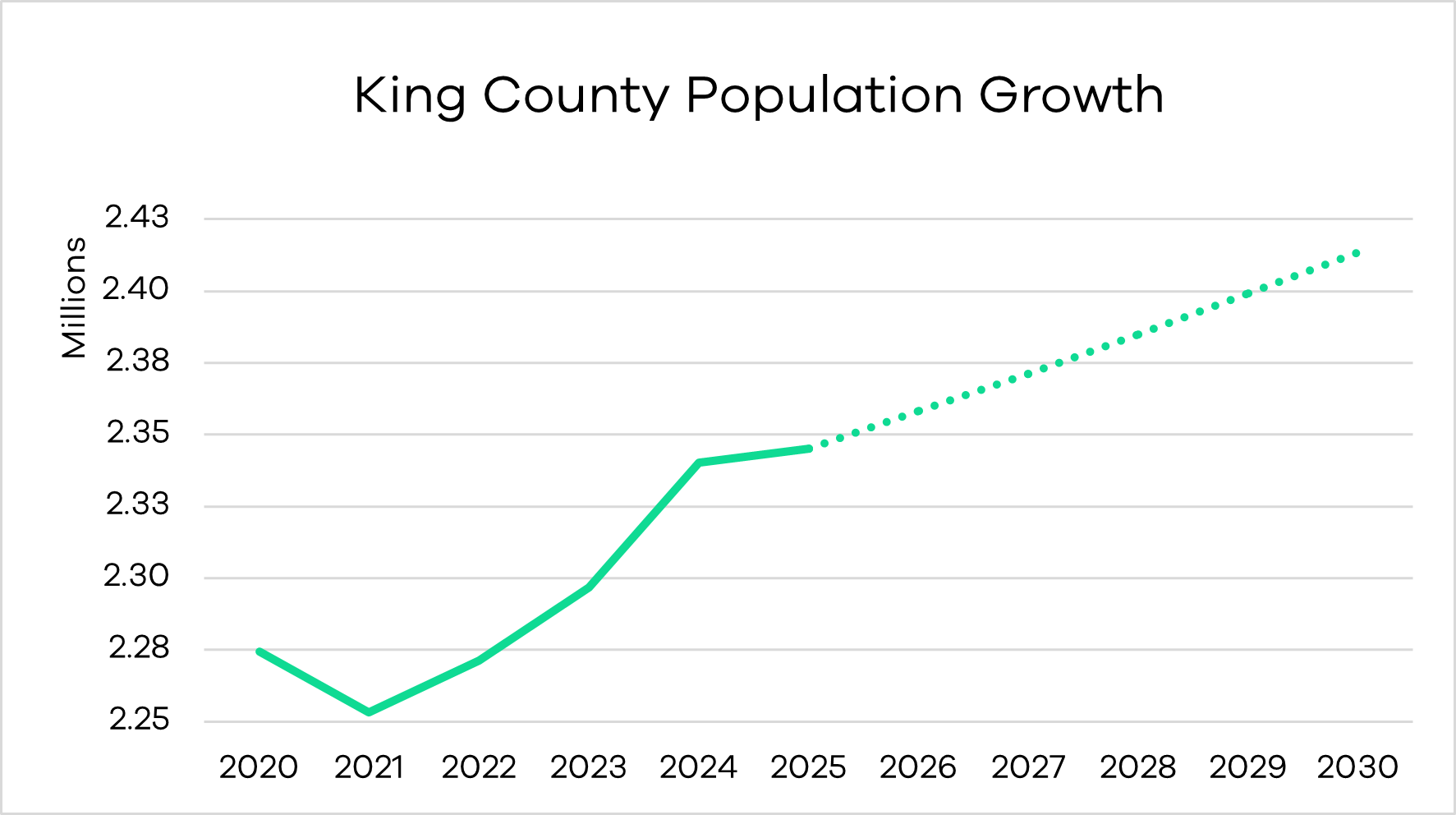
As of 2025, King County is home to 2,345,006 residents, making it the most populous county in Washington state and a major driver of economic growth in the Pacific Northwest. King County generates the majority of Washington state’s economic activity and remains one of the leading technology and innovation economies in North America.
King County’s economy supports 1,598,838 jobs across industries including technology, aerospace, healthcare, artificial intelligence, cloud computing, life sciences, clean technology, logistics, and advanced manufacturing. Median household income reached $122,100, more than $43,000 above the national median, reflecting the concentration of highly skilled talent and high-value industries throughout the county.
Population growth has remained steady in recent years. Since 2020, King County has added 70,657 residents, with projections indicating an additional 68,383 residents by 2030.
2025 Population
Total Employment
Median Household Income
Labor Force Participation
Millennial Workforce
Businesses
Employment and Labor Market Trends
King County’s labor market remains one of the strongest in the United States. Between 2020 and 2025, total employment increased by 5.4%, adding more than 82,000 jobs. Continued growth is expected over the next five years, with projections showing more than 54,000 additional jobs by 2030.
The unemployment rate has declined significantly since the pandemic, falling from 8.43% in 2020 to approximately 4.86% in December 2025, reflecting the strength and resilience of the regional economy.
Labor force participation remained strong at approximately 70% in 2025, supporting King County’s position as a leading innovation and knowledge economy with a highly engaged workforce.
Key Industries Driving the King County Economy
King County’s economy is driven by a diverse mix of globally competitive industries and internationally recognized companies. Information technology and professional, scientific, and technical services generate the largest share of economic output, reflecting the county’s global leadership in innovation, software, cloud computing, and artificial intelligence.
Major employment sectors include:
- Accommodation and Food Services
- Government
- Health Care and Social Assistance
- Information Technology
- Manufacturing
- Professional, Scientific, and Technical Services
- Retail Trade
The county is home to some of the world’s most influential companies, including Amazon, Microsoft, Boeing, Meta, Google, Costco, Starbucks, and Expedia Group, along with major institutions such as the University of Washington and King County government.
Together, these companies support one of the most dynamic business ecosystems in North America and reinforce King County’s position as a global center for technology, aerospace, clean energy, life sciences, and advanced industries.
Population and Workforce Demographics
King County benefits from one of the largest and most educated workforces in the United States. The county is home to 638,377 millennials between the ages of 25 and 39, significantly above the national average for regions of comparable size and an important driver of workforce growth and entrepreneurship.
Educational attainment remains exceptionally high. Approximately 32.9% of residents hold a bachelor’s degree, while 24.6% hold a graduate or professional degree, far exceeding national averages and supporting the county’s highly skilled workforce.
The county is also highly diverse, with more than 1.1 million residents identifying as part of racially diverse communities. This diversity strengthens global connectivity, workforce competitiveness, and the region’s innovation ecosystem.
Migration and Regional Connectivity
Migration patterns highlight strong economic and workforce connections across the Greater Seattle region. In 2022, 10,137 residents moved from Snohomish County to King County, while 18,818 residents moved from King County to Snohomish County, reflecting strong commuting and residential patterns across the regional labor market.
Additional migration flows include Pierce County, Washington; Los Angeles County, California; Santa Clara County, California; and Maricopa County, Arizona, demonstrating King County’s continued role as a national and global destination for talent, business growth, and opportunity.
Business Environment and Innovation Ecosystem
King County maintains one of the most vibrant business ecosystems in the United States. According to the report’s business characteristics analysis, 245,673 companies employ workers across the county, representing a diverse mix of multinational corporations, technology startups, research institutions, manufacturers, and small businesses.
The county’s startup ecosystem continues to attract entrepreneurs, venture capital investment, and global talent. Innovation hubs across artificial intelligence, cloud computing, clean energy, biotechnology, aerospace, and advanced manufacturing contribute to long-term economic competitiveness.
In the past year alone, more than 23,000 companies posted job openings, reflecting continued demand for talent across technology, healthcare, logistics, professional services, and innovation-driven industries.
Sources: Lightcast, 2026; Puget Sound Business Journal Book of Lists, 2026.
The report was researched and written by Dr. Victoria DePalma, Greater Seattle Partners Research Director.
Other 2025 Greater Seattle Region Reports:
2025 Greater Seattle Region Economic Overview
Pierce County Economic Overview 2025
Snohomish County Economic Overview 2025
Greater Seattle Trade Overview 2025
Foreign Direct Investment Overview 2025
Greater Seattle Startup Funding and Venture Capital Trends 2025
Greater Seattle Aerospace Industry in 2025

Ready to take advantage of everything Greater Seattle has to offer?